
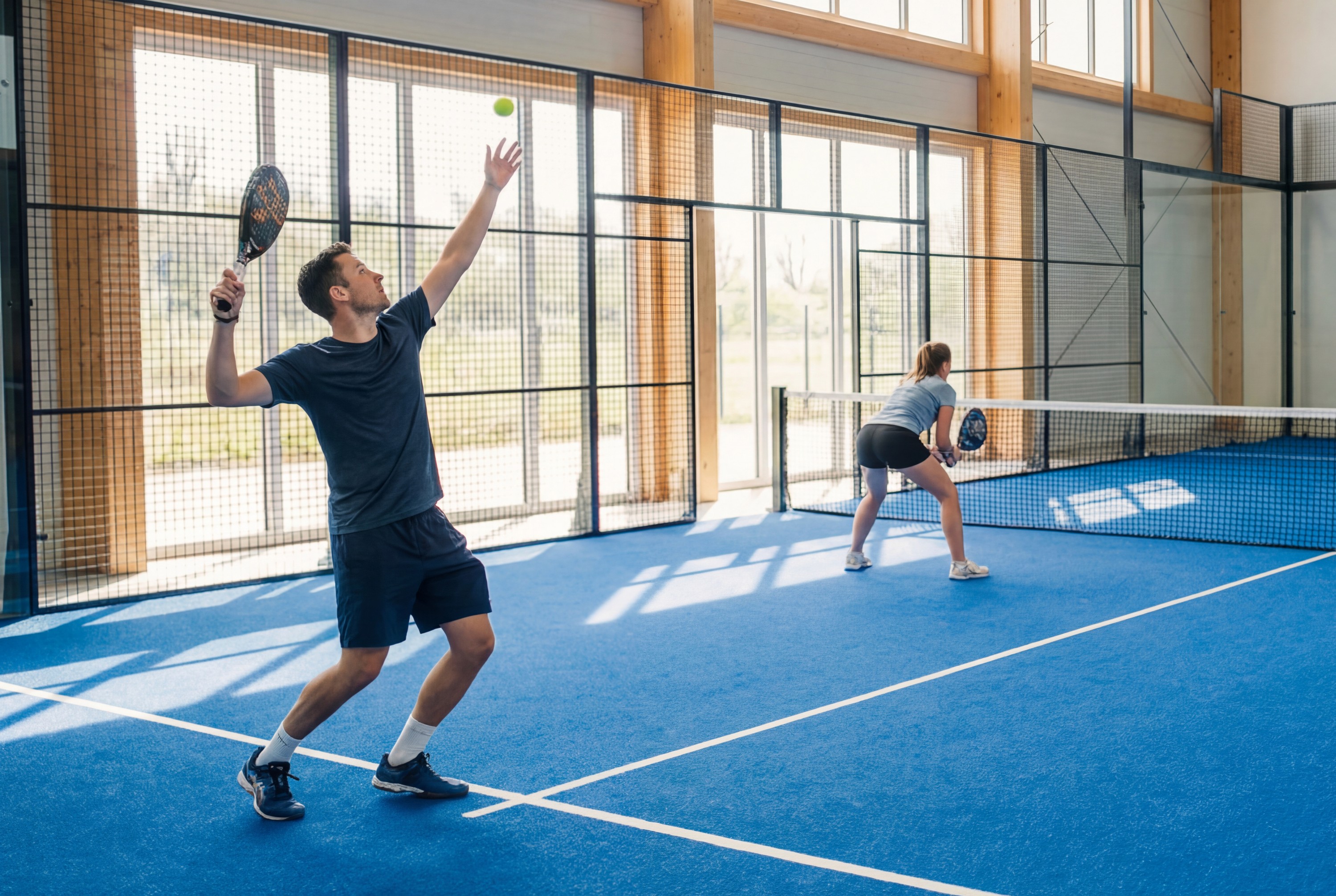
Padel is a racket sport played exclusively in doubles on an enclosed court. The most distinctive feature of padel is the use of glass walls, which are actively involved in the game. After the ball bounces on the ground, it can rebound off the glass and remain in play, extending rallies and adding a strong tactical dimension.
Unlike tennis, padel is not built around power. Instead, it rewards patience, positioning, and teamwork. This makes the sport accessible to beginners while still offering depth and complexity for experienced players.
Most people can enjoy a proper rally within their first session, which is one of the reasons padel has spread so quickly worldwide.
Understanding the Padel Court
Every padel match is played in doubles, which means communication and teamwork are essential from the very first point. Serves are always performed underhand, with the ball struck below waist height and hit diagonally into the opponent’s service box.
After the serve, the game flows quickly. Players can volley at the net, defend from the back of the court, or wait for the ball to rebound off the glass before returning it. The ball must always bounce on the ground before touching any wall, but once that bounce happens, the walls become part of the rally.
This combination of ground play and wall rebounds creates longer, more tactical exchanges than most racket sports.
Scoring and Match Format
Padel uses the same scoring system as tennis: 15, 30, 40, and game. Matches are usually played as best of three sets, and deuce and advantage rules apply in the same way.
For players coming from tennis, this makes padel very easy to understand from a scoring perspective. The biggest adjustment is learning when to slow the game down and when to attack.
How Padel Differs from Tennis
Although padel and tennis share similarities, the playing experience is very different. Padel is always played in doubles, on a smaller court, and with walls that remain in play. Serves are underhand rather than overhand, which removes the dominance of power and places more emphasis on consistency and placement.
Why Padel Has Become So Popular
Padel’s rise is no accident. The sport is easy to pick up, social by nature, and physically less demanding than many racket sports. Beginners can enjoy long rallies almost immediately, while advanced players continue to find new tactical layers as they improve.
Many players describe padel as a sport that feels fun from the very first match — and that feeling keeps them coming back.